When you're out on the water, the sense of freedom is unrivaled — but medical risks can rise quickly. On a boat, professional help may be hours away. Whether you’re cruising coastal waters, crossing open seas, or running a charter, having a purpose-built medical kit is essential. This guide breaks down what to include, how to store it, when to upgrade, and how two of Rescue Essentials’ kits can serve different boating needs.
Why Boat Owners Need a Dedicated Marine Medical Kit
Delayed access to care. Away from shore, EMS response is not instant.
Challenging environment. Saltwater, humidity, spray, and constant motion can degrade normal first-aid supplies.
Unique injury risk. Boarding/deboarding, propellers, sun exposure, and engine burns present distinct hazards.
Regulatory & practical expectations. Even if not strictly required, having a well-prepared medical kit is best practice — especially for charter or commercial operations.
Regulatory & Guideline Considerations
U.S. Coast Guard Requirements: Under 46 CFR § 184.710, vessels are required to carry a first-aid kit that either meets the standard in 46 CFR § 199.175(b)(10) or has equivalent contents and instructions. The kit must be stored in a watertight container, labeled “First-Aid Kit,” and easily accessible to crew.
Kit Maintenance Guidance: Coast Guard guidance (NVIC 5-86) recommends keeping medical supplies in individually sealed packages, checking your kit contents before each outing, and immediately replacing used or expired items.
Modern Certification: Many newer kits self-certify to ISO 18813:2006, which requires waterproof packaging, first-aid instructions, and a baseline of essential medical content.
(Note: The citations above refer to publicly available Coast Guard guidance and regulatory sources.)
Common Medical Risks When Boating
Boat owners should plan for: Bleeding from lacerations or punctures, blunt trauma (falls, collisions), burns (engines, fuel, hot surfaces), hypothermia or heat illness, motion sickness, allergic reactions or anaphylaxis, dehydration
What to Include: Key Medical Kit Supplies for Boat Owners
Here’s a breakdown of what your marine first-aid kit should contain, tailored for ocean, lake, or inshore boating:
Tourniquet
Hemostatic gauze
Pressure dressing
Large trauma dressings
CPR mask / pocket resuscitator
Oropharyngeal (OPA) and Nasopharyngeal (NPA) airways
Suction device (compact)
Trauma shears
Gauze pads (various sizes)
Non-adherent pads
Stretch gauze
Adhesive bandages (various shapes)
Antiseptic wipes or prep pads
Antibiotic ointment
Irrigation syringe
SAM splint + finger splints
Triangular bandages
Elastic wraps
Emergency thermal blanket
Instant cold packs
Oral rehydration salts
Sunscreen / insect repellent
Pain relievers (ibuprofen, acetaminophen)
Antihistamines
Motion sickness tablets
Hydrocortisone cream or hydrocortisone wipes
Antibiotic ointment
Prescription / epinephrine (if needed)
Burn dressing or gel
Eye wash solution
Digital thermometer
Emergency whistle
Waterproof flashlight or headlamp
First-aid manual
Waterproof, crush-resistant hard case (recommended for offshore)
Clearly labeled “First-Aid Kit”
Organized in internal modules for fast access
Recommended Kit Levels & Examples
Example 1: Nano Waterproof First Aid Kit (Inshore / Day Trips)
The Nano Waterproof First Aid Kit from Rescue Essentials is ideal for small vessels that operate close to shore. The hard, waterproof container ensures that your supplies remain dry despite spray, humidity, or unexpected roost.
Contents that matter for boaters:
- Gauze sponges, stretch gauze, and ABD pad cover general wound care.
- Waterproof tape and moleskin manage friction injuries from wet decks.
- Adhesive and butterfly bandages for cuts and punctures.
- Burn cream (unit dose) handles minor burns.
- Essential meds: ibuprofen, acetaminophen, antihistamines, aspirin.
- Tools include EMT shears and tweezers.
- Included gloves protect you and your crew.
Because of its size, this kit works well in kayaks, jet skis, small center consoles, or as a secondary grab-and-go kit on larger boats.
Example 2: Marine Responder 920 Hard Case First Aid Kit (Offshore / High-Risk)
For boat owners heading offshore, carrying large crews, or running charter operations, the Marine Responder 920 Hard Case First Aid Kit is a professional-grade solution:
Critical contents:
Major Bleeding Control: Gen 5 SOF Tourniquet, wound packing gauze, emergency pressure dressing, chest seals, and medic tape.
Airway Management: Pocket BVM, oropharyngeal airway, nasopharyngeal airway, tactical suction kit.
Orthopedic / Stabilization: 36″ SAM splint, finger splints, triangular bandages, elastic bandages, cohesive wrap, cold pack.
Wound Care: Large and small gauze pads, non-adherent pads, conforming stretch gauze, petrolatum gauze, wound irrigation kit, plus moleskin and steri-strips.
Burn & Environmental: Burn gels (Water-Jel), rehydration powder, hypothermia blanket.
Medications & Topicals: Meclizine (motion sickness), triple antibiotic ointment, hydrocortisone cream, eye wash, ammonia inhalants, alcohol prep, sting-relief, iodine prep.
Tools: Shears, scissors, tweezers, digital thermometer, gloves.
The kit is stored in a Nanuk 920 hard case, which is waterproof, impact-resistant, and lockable. The modular Rescue Essentials med pouches help you quickly access bleeding control, airway tools, or wound care, depending on the emergency.
This kit strongly aligns with Coast Guard expectations (watertight case, trauma control) and is suitable when help is distant or when your crew has training in advanced first-aid.
How to Pack and Store Your Medical Kit Aboard
Waterproof container. Store your first-aid supplies in a watertight, labeled box. Both the Nano and the Nanuk 920 meet this standard.
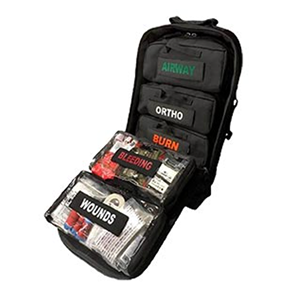
Organization. Use internal modules or pouch systems: group bleeding supplies, airway tools, and wound care separately for fast access.
Accessibility. Place the kit where it’s easily reachable (e.g., near the helm or in a dry locker) but protected from UV and heat.
Pressurization. If using a hard case, consider one with a pressure-relief valve — this helps maintain seal integrity despite temperature or altitude changes.
Redundancy. For longer trips, carry a secondary, compact “grab-and-go” kit (like the Nano) in addition to your main case.
Inspection & Restocking Routine
Monthly checks. Before every trip season, inspect your kit. Verify all items are present, unexpired, and sealed.
After use. Replace anything used immediately. Don’t wait: even a small item can make a big difference in your next trip.
Expiration tracking. Medications, sterile dressings, and burn gels degrade over time. Track and replace as needed.
Training. Ensure at least one crew member knows how to use advanced items (tourniquet, BVM, splint). Basic first-aid training isn’t enough for managing severe trauma.
Seal or tag the kit. Use a tamper-evident seal or paper tag on the case so you know if it’s been opened or disturbed since the last check — a tactic recommended in Coast Guard guidance.
Common Medical Risks When Boating
Boat owners should plan for:
- Bleeding from lacerations or punctures
- Blunt trauma (falls, collisions)
- Burns (engines, fuel, hot surfaces)
- Hypothermia or heat illness
- Motion sickness
- Allergic reactions or anaphylaxis
- Dehydration