
Vehicle First Aid Kits: How to Choose the Best First Aid Kit for Your Vehicle
Whether you're commuting to work, taking the family on a road trip, responding to an emergency, or traveling into the backcountry, having the right vehicle first aid kit can help you be prepared when an injury occurs.
But not every vehicle needs the same type of medical kit. A family sedan may need a compact kit for everyday cuts, burns, and minor injuries, while an EMS vehicle, law enforcement vehicle, SAR truck, or off-road rig may require supplies for severe bleeding, splinting, burns, and other emergencies.
In this guide, we'll explain what to look for in vehicle first aid kits and highlight several Rescue Essentials options for different drivers, vehicles, training levels, and scenarios.
Why Keep a First Aid Kit in Your Vehicle?
Most people think about vehicle safety in terms of seat belts, airbags, emergency roadside equipment, and routine maintenance. A first aid kit in a vehicle is another important part of being prepared.
Injuries can happen anywhere, including places where emergency medical services may take time to arrive. A properly stocked first aid kit for a vehicle can provide immediate access to supplies for common injuries and, depending on the kit and the user's training, more serious trauma.
Vehicle first aid kits can be especially useful for families, commuters, outdoor enthusiasts, law enforcement officers, first responders, motorcycle riders, and businesses operating a fleet of vehicles.
Why Vehicle First Aid Kits Are Different
A vehicle kit needs to balance three things: what you may encounter, what you know how to use, and how much space you have available.
A basic kit for a family car doesn't necessarily need the same equipment as a kit in a law enforcement vehicle. Likewise, a motorcycle rider may prioritize compact, waterproof storage while a company operating a fleet may prioritize standardization and easy restocking.
What Should Be in a Vehicle First Aid Kit?
There is no single list of supplies that is right for every driver. A basic vehicle first aid kit should generally address common injuries, while a more advanced vehicle medical kit may include trauma supplies for trained users.
Basic First Aid Supplies
For everyday drivers and families, useful supplies can include adhesive bandages, gauze, wound dressings, antiseptic supplies, medical tape, gloves, burn treatment, and other basic wound-care items.
Bleeding-Control Supplies
Drivers with appropriate training may want to add equipment designed to address life-threatening bleeding. Depending on the kit, this can include tourniquets, pressure dressings, hemostatic gauze, wound-packing supplies, and other trauma equipment.
Important: Advanced medical equipment should be used according to appropriate training, protocols, and manufacturer instructions.
Splinting and Immobilization
For vehicles that travel into remote areas or are used for outdoor activities, splinting supplies can be useful for certain sprains, fractures, and other orthopedic injuries.
Burn Treatment
Burn supplies can be particularly useful in vehicles used for outdoor recreation, construction, roadside work, camping, or other activities where exposure to heat or fire is possible.
Organization and Accessibility
A first aid kit is only useful if you can find what you need quickly. Look for a kit with organized compartments, clearly identifiable supplies, and a storage location that remains accessible when the vehicle is loaded with passengers or equipment.
Best Vehicle First Aid Kits: Top Picks for Every Driver
There are hundreds of first aid kits on the market, but not all are designed with vehicle use in mind. The best vehicle first aid kit depends on your vehicle, training, activities, passengers, and the types of emergencies you want to be prepared to handle.
Here are several Rescue Essentials options for different drivers and scenarios.
1. LE Vehicle First Aid Kit
Best for: Everyday drivers, families, commuters, and basic first aid.

The LE Vehicle First Aid Kit is a practical choice for drivers who want a well-organized assortment of supplies for everyday injuries.
The kit contains more than 100 components organized in seven waterproof, resealable bags. Supplies address common injuries including wounds, burns, sprains, and other everyday first aid needs.
The compact pouch also provides room for users to add additional supplies based on their individual needs, such as personal medications or additional trauma equipment.
Pros:
- 100+ components
- Compact and easy to store
- Waterproof resealable bags help organize supplies
- Good option for everyday first aid
- Room to add additional supplies
Cons:
- Primarily designed for basic first aid
- Not designed as comprehensive advanced trauma kit
View the LE Vehicle First Aid Kit
2. First Responder Vehicle Kit
Best for: Car campers, road warriors, EMS vehicles, law enforcement vehicles, SAR trucks, and fleet vehicles.

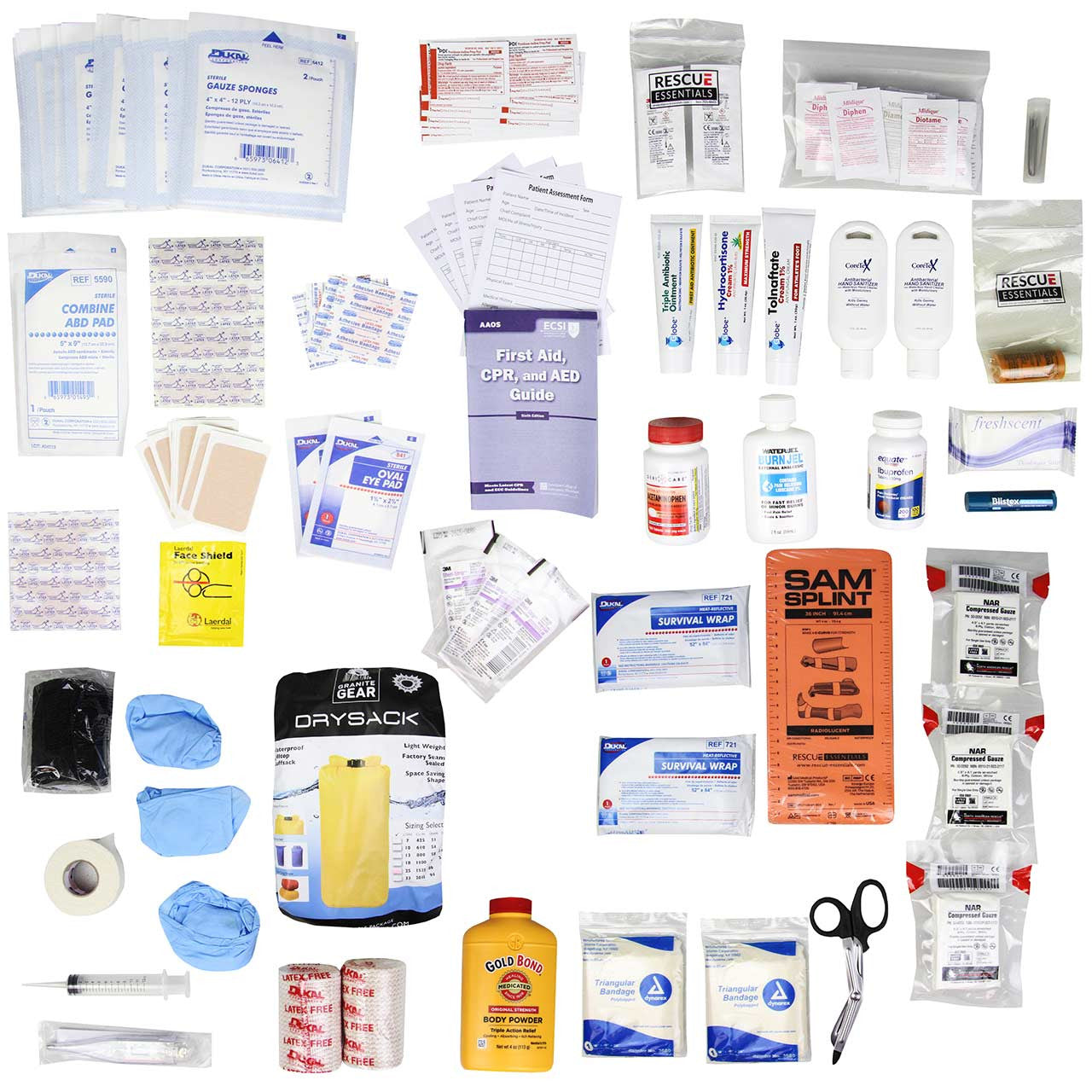
The First Responder Vehicle Kit is a more comprehensive option for people who want a broad range of medical supplies available in their vehicle.
The kit contains 130 components addressing a wide variety of injuries and situations, including severe bleeding, minor wounds, burns, splinting, medications, and other first aid needs.
It was originally developed in cooperation with Denver International Airport for use in airport vehicles and is well suited for professional vehicles, outdoor travelers, first responders, and others who want more capability than a basic vehicle first aid kit provides.
Pros:
- 130 components
- Comprehensive medical coverage
- Includes supplies for severe bleeding
- Includes minor wound, burn, and splinting supplies
- Good choice for professional and fleet vehicles
Cons:
- Larger than compact vehicle kits
- Requires more dedicated storage space
View the First Responder Vehicle Kit
3. Compact First Responder – CFR
Best for: Drivers with additional first aid training, law enforcement officers, EMTs, and first responders.

The Compact First Responder (CFR) is designed to provide more capability than a basic first aid kit while maintaining a compact footprint.
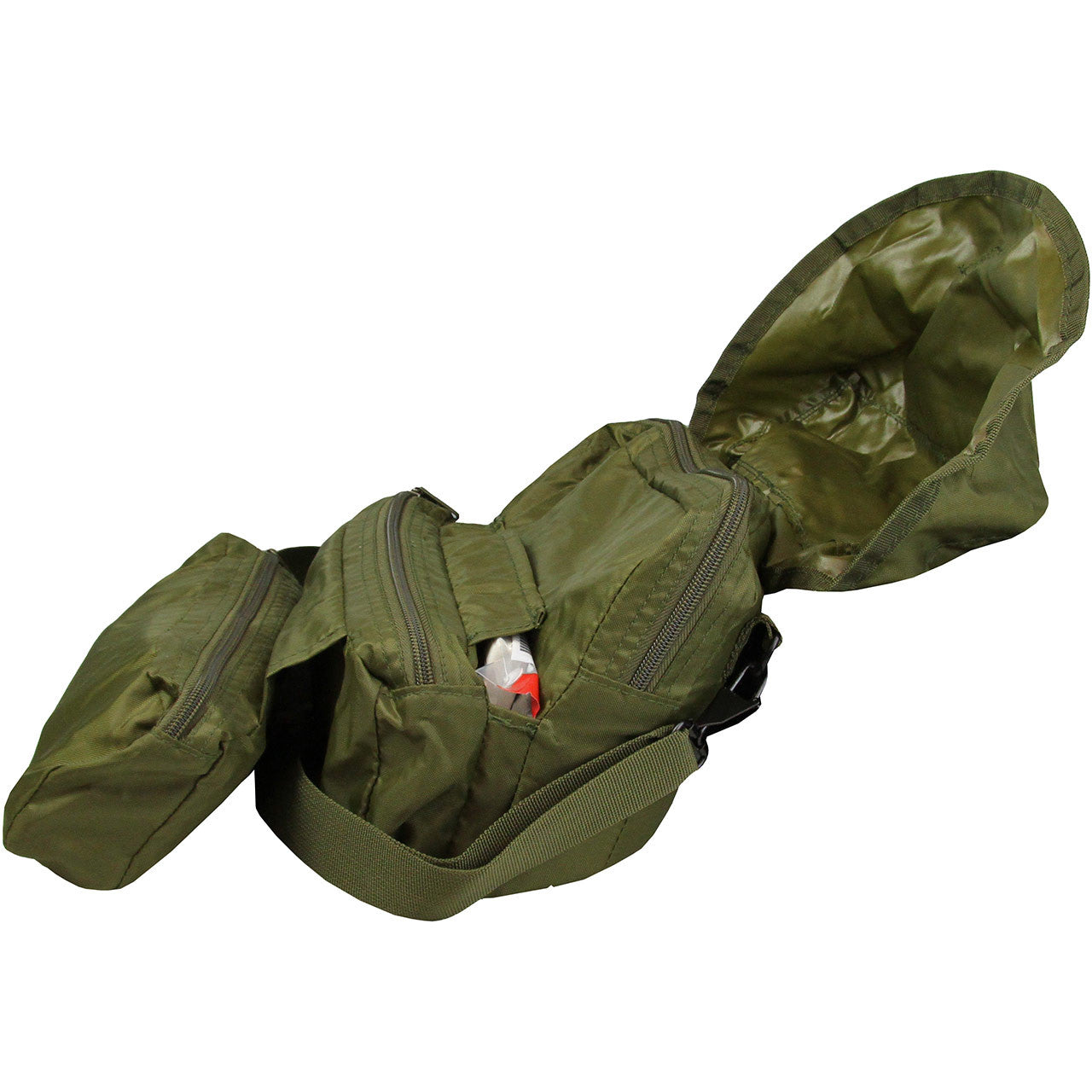
The kit combines supplies for severe bleeding with equipment for minor wounds, burns, splinting, and other first aid needs. Its compact tri-fold pouch is particularly useful for everyday vehicles where space is limited.
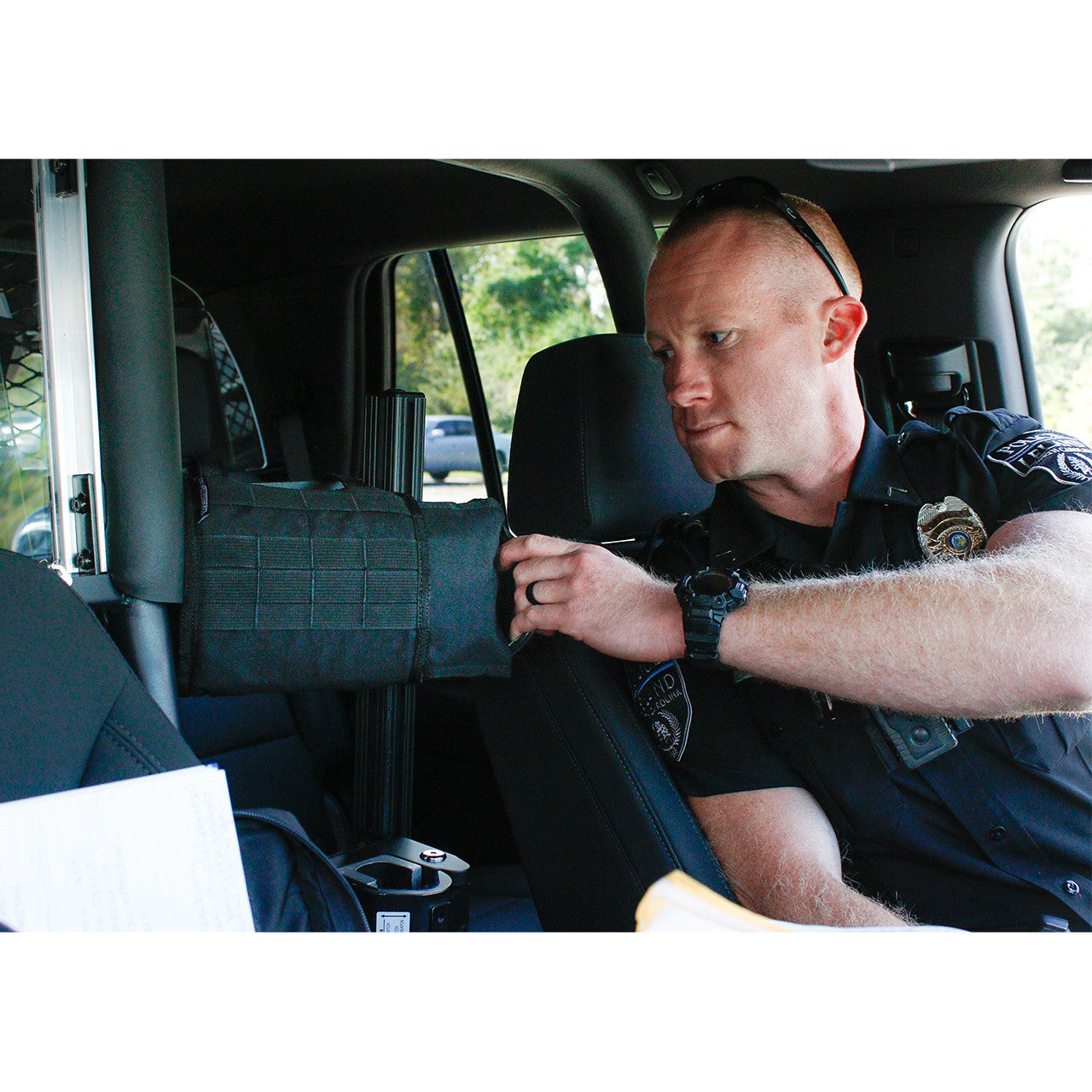
The CFR can also be used with the Rescue Essentials MOLLEHead Vehicle Mount for dedicated vehicle storage.
Pros:
- Compact size
- Designed for first responder use
- Includes trauma and basic first aid supplies
- Can be mounted inside a vehicle
- Good option for trained users
Cons:
- Some components require appropriate medical training
- Less comprehensive than the First Responder Vehicle Kit
View the Compact First Responder Kit
4. Executive Protection Vehicle Kit
Best for: Executive protection details and low-profile or covert carry.

The Executive Protection Vehicle Kit provides a comprehensive medical configuration in a discreet black rip-away pouch.
It is based around the CFR configuration and provides a combination of trauma supplies, basic first aid, wound-care equipment, medications, and other medical supplies in a low-profile package.
This makes it particularly useful for executive protection professionals and others who don't want a brightly identifiable medical bag in their vehicle.
Pros:
- Discreet appearance
- Comprehensive medical configuration
- Compact organization
- Can be mounted using the MOLLEHead Vehicle Mount
- Useful for professional protection details
Cons:
- Not immediately recognizable as a first aid kit to bystanders
View the Executive Protection Vehicle Kit →
5. Flat IFAK Vehicle Kit
Best for: Law enforcement, military, trained drivers, and users who want rapid access to trauma supplies.

The Flat IFAK Vehicle Kit is designed for users who want trauma supplies in a compact, low-profile configuration.
The kit includes tactical bleeding-control equipment as well as basic first aid supplies. Its flat design makes it particularly useful in vehicles where storage space is limited.
When combined with the MOLLEHead Vehicle Mount, it can be positioned behind a vehicle headrest for quick access.
Pros:
- Low-profile design
- Compact and easy to store
- Designed for rapid access to trauma supplies
- Includes basic first aid supplies
- Compatible with vehicle mounting
Cons:
- Less comprehensive than the First Responder Vehicle Kit
- Best suited to users with appropriate trauma training
View the Flat IFAK Vehicle Kit
6. Motorcycle Operator IFAK
Best for: Motorcycle enthusiasts, motorcycle patrol officers, and riders who need compact medical equipment.

Motorcycles create a unique challenge when it comes to emergency equipment: storage space is limited, but riders can encounter serious injuries.
The Motorcycle Operator IFAK is designed around those requirements.
The compact kit includes supplies for catastrophic bleeding, burns, splinting, minor wounds, and everyday first aid. Its small format allows it to fit into many motorcycle storage compartments.
Pros:
- Compact design
- Designed specifically for motorcycle riders
- Includes severe bleeding supplies
- Includes burn and splinting supplies
- Includes minor wound care
Cons:
- Designed specifically around motorcycle storage and response
- Not intended to replace a comprehensive wilderness or survival system
View the Motorcycle Operator IFAK
Which Vehicle First Aid Kit Is Right for You?
Choosing a first aid kit for vehicle use starts with understanding what you expect the kit to do.
For Everyday Drivers
If your primary concern is dealing with cuts, scrapes, burns, minor wounds, and other everyday injuries, the LE Vehicle First Aid Kit is a practical option.
For Families and Road Trips
Families who spend significant time on the road may want a more comprehensive kit. The LE kit is appropriate for basic first aid, while the First Responder Vehicle Kit provides broader medical capabilities.
For Car Camping and Outdoor Travel
If you frequently travel away from immediate access to medical services, consider a more comprehensive vehicle medical kit. The First Responder Vehicle Kit provides supplies for a wider variety of injuries and situations.
For Law Enforcement
Law enforcement users may prefer the CFR, Flat IFAK Vehicle Kit, or First Responder Vehicle Kit, depending on their training, available vehicle space, and operational requirements.
For EMS and First Responders
Professional responders may want a more comprehensive configuration. The First Responder Vehicle Kit provides a broad selection of medical supplies, while the CFR offers a more compact alternative.
For Motorcycle Riders
Motorcycle riders have limited storage space and unique injury considerations. The Motorcycle Operator IFAK provides a compact solution designed around motorcycle use.
First Aid Kits for Company Vehicles and Fleets
A first aid kit for company vehicles should be selected based on the work employees perform, the environments they operate in, and the types of injuries they could encounter.
Businesses with multiple vehicles may benefit from standardizing the same kit across their fleet. Standardization makes it easier for employees to know where medical supplies are located and can simplify inspection, replacement, and restocking.
Passenger vehicles may only require basic first aid, while construction vehicles, field-service trucks, public safety vehicles, and emergency-response vehicles may require more comprehensive medical equipment.
If your organization operates multiple vehicles, Rescue Essentials can help design and assemble kits around your requirements.
Learn About Custom & Contract Kit Options
How to Store a First Aid Kit in Your Vehicle
Finding the right location for a first aid kit in vehicle storage is almost as important as selecting the kit itself.
A kit should be easy to locate and accessible when the vehicle is occupied by passengers, equipment, or luggage. Depending on the size of the vehicle and the kit, possible storage locations include the glove compartment, center console, rear cargo area, trunk, or another dedicated storage compartment.
Consider a Dedicated Vehicle Mount
For trained users who need rapid access to trauma supplies, mounting the kit in a consistent location can be especially useful.
The MOLLEHead Vehicle Mount is designed to attach to a vehicle headrest and provides a dedicated mounting platform for compatible Rescue Essentials medical kits.
Compatible kits include the Compact First Responder, Executive Protection Vehicle Kit, and Flat IFAK Vehicle Kit.
View the MOLLEHead Vehicle Mount
Build Your Own Vehicle First Aid Kit
Sometimes the best vehicle first aid kit isn't an off-the-shelf configuration.
Agencies, companies, organizations, and experienced medical professionals may have specific requirements based on their operations, personnel, vehicles, training, or environment.
Building a custom kit allows you to select the components that make the most sense for your needs rather than purchasing equipment you don't need or leaving out supplies that are important to your operation.
Custom Vehicle Kits Can Help You:
- Standardize medical equipment across a fleet
- Select specific components and quantities
- Build kits around employee training
- Meet organization-specific equipment requirements
- Simplify inspection and restocking
- Create purpose-built kits for specialized vehicles
Rescue Essentials can help organizations design, source, and assemble custom medical kits to their specifications.
Talk to Rescue Essentials About Custom Kits
Vehicle First Aid Kit Comparison
| Kit | Best For | Primary Focus | Trauma Capability | Basic First Aid |
|---|---|---|---|---|
| LE Vehicle First Aid Kit | Everyday drivers and families | General first aid | Limited | Excellent |
| First Responder Vehicle Kit | EMS, LE, SAR and fleet vehicles | Comprehensive response | Yes | Excellent |
| Compact First Responder – CFR | Trained drivers and responders | Compact trauma + first aid | Yes | Excellent |
| Executive Protection Vehicle Kit | Executive protection | Low-profile medical response | Yes | Excellent |
| Flat IFAK Vehicle Kit | LE, military and trained drivers | Low-profile trauma + first aid | Yes | Good |
| Motorcycle Operator IFAK | Motorcycle riders | Motorcycle injury response | Yes | Good |
Vehicle First Aid Kit FAQs
What is the best vehicle first aid kit?
The best vehicle first aid kit depends on how you plan to use it. For everyday drivers and families, the LE Vehicle First Aid Kit is a practical option for basic first aid. For more comprehensive preparedness, the First Responder Vehicle Kit provides supplies for severe bleeding, minor wounds, burns, splinting, and other needs. Trained users looking for a compact option may prefer the Compact First Responder – CFR or Flat IFAK Vehicle Kit.
What should I keep in a first aid kit for a vehicle?
A basic first aid kit for a vehicle should include supplies for common injuries such as adhesive bandages, gauze, wound dressings, antiseptic supplies, medical tape, gloves, and burn treatment. Users with appropriate medical training may also want trauma supplies such as a tourniquet, pressure dressing, hemostatic gauze, and other bleeding-control equipment.
Should I keep a first aid kit in my car?
Keeping a first aid kit in your vehicle provides access to medical supplies while traveling. A vehicle kit can be particularly useful during road trips, outdoor activities, long-distance travel, or situations where emergency medical services may not be immediately available. Choose a kit appropriate for your vehicle, passengers, activities, and level of training, and periodically inspect it for used, damaged, or expired supplies.
What is a good basic vehicle first aid kit?
The LE Vehicle First Aid Kit is a good option for everyday drivers and families looking for a compact basic vehicle first aid kit. It includes more than 100 components organized in waterproof, resealable bags and provides room to add additional supplies based on your individual needs.
What is the best vehicle first aid kit for law enforcement?
Law enforcement users may prefer different configurations depending on training, available vehicle space, and operational requirements. The LE Vehicle First Aid Kit is appropriate for general first aid, while the Compact First Responder – CFR provides a compact combination of trauma and basic first aid supplies. The Flat IFAK Vehicle Kit is another option for users who want low-profile access to trauma and basic wound-care supplies.
What is the best first aid kit for company vehicles?
The best first aid kit for company vehicles depends on the work being performed and the hazards employees may encounter. Businesses may benefit from standardizing the same kit across vehicles so employees know where supplies are located and fleet managers can simplify inspections and restocking. For organizations with specialized requirements, Rescue Essentials can also help develop custom medical kit configurations.
Learn About Custom & Contract Kit Options →
Can I mount a first aid kit inside my vehicle?
Yes. The MOLLEHead Vehicle Mount attaches to a vehicle headrest and provides a dedicated mounting platform for compatible Rescue Essentials medical kits. Compatible options include the Compact First Responder, Executive Protection Vehicle Kit, and Flat IFAK Vehicle Kit.
View the MOLLEHead Vehicle Mount →
What is a survival vehicle first aid kit?
A survival vehicle first aid kit is generally intended for situations where you may be traveling farther from professional medical care or dealing with a broader range of potential emergencies. The appropriate contents depend on your destination, activities, environment, and level of medical training.
For remote travel, consider a more comprehensive vehicle medical kit along with other emergency supplies appropriate to your trip. The First Responder Vehicle Kit is one option for users who want a broad selection of medical supplies in their vehicle.
How often should I check my vehicle first aid kit?
Inspect your vehicle first aid kit periodically to make sure supplies are present, packaging is intact, and products have not been damaged by heat, moisture, or other environmental conditions. Replace supplies that have been used, damaged, contaminated, or expired. Vehicle temperatures can fluctuate significantly, so periodically checking the condition of heat-sensitive supplies is especially important.
Where should I keep a first aid kit in my vehicle?
Store your first aid kit in your vehicle where it can be located quickly and accessed without having to unload luggage or other equipment. Depending on the vehicle and kit size, possible locations include a glove compartment, center console, rear cargo area, trunk, or dedicated vehicle mounting system.
For trained users who need rapid access to trauma supplies, a dedicated mount such as the MOLLEHead Vehicle Mount can provide a consistent location for a compatible medical kit.
Be Prepared for the Road Ahead
Whether you need a basic first aid kit for your daily commute, a comprehensive medical kit for a fleet vehicle, or a compact trauma-focused kit for a law enforcement or emergency-response vehicle, choosing the right equipment can help you be better prepared when an injury occurs.
The key is to choose a kit based on your vehicle, training, environment, passengers, and the situations you are most likely to encounter.
Explore Rescue Essentials vehicle first aid kits and find the configuration that fits your needs.
Medical equipment should be used according to applicable training, protocols, and manufacturer instructions. Some components included in advanced medical kits are intended for trained users.


Share:
AirBase - The Multi-purpose Inflatable Insulation Pad
Hemostatic Dressings: Types, Uses and How They Work