

A hemostatic dressing can be a useful addition to a trauma kit, range bag, vehicle kit or wilderness first aid kit. However, the product name alone does not tell you what the dressing is designed to do.
Some hemostatic products are full-length gauze intended for wound packing. Others are flat pads for surface bleeding, narrow ribbons for smaller wound channels or applicators designed for specialized uses. Their active or functional materials may include kaolin, chitosan, collagen, cellulose or a combination of specialized fibers.
The question is not simply, “Which brand is best?”. Here are some questions and scenarios to consider when choosing:
Which material and format match the bleeding problem I am trained to manage?
Emergency note: Life-threatening bleeding requires immediate action and emergency medical help. Use direct pressure, wound packing or a tourniquet as appropriate and as trained. A hemostatic dressing is an adjunct. It does not replace training or the other components of a bleeding-control kit. American Red Cross guidance directs first aid providers to use a hemostatic dressing if available while applying steady, firm pressure. Current TCCC guidance calls for hemostatic dressings in certain cases of compressible external bleeding that cannot be managed with a limb tourniquet.
What is a hemostatic dressing?
A hemostatic agent is a material designed to promote or support clot formation at the source of bleeding. A hemostatic dressing is the physical form that places the agent in contact with the wound.
That form might be:
-
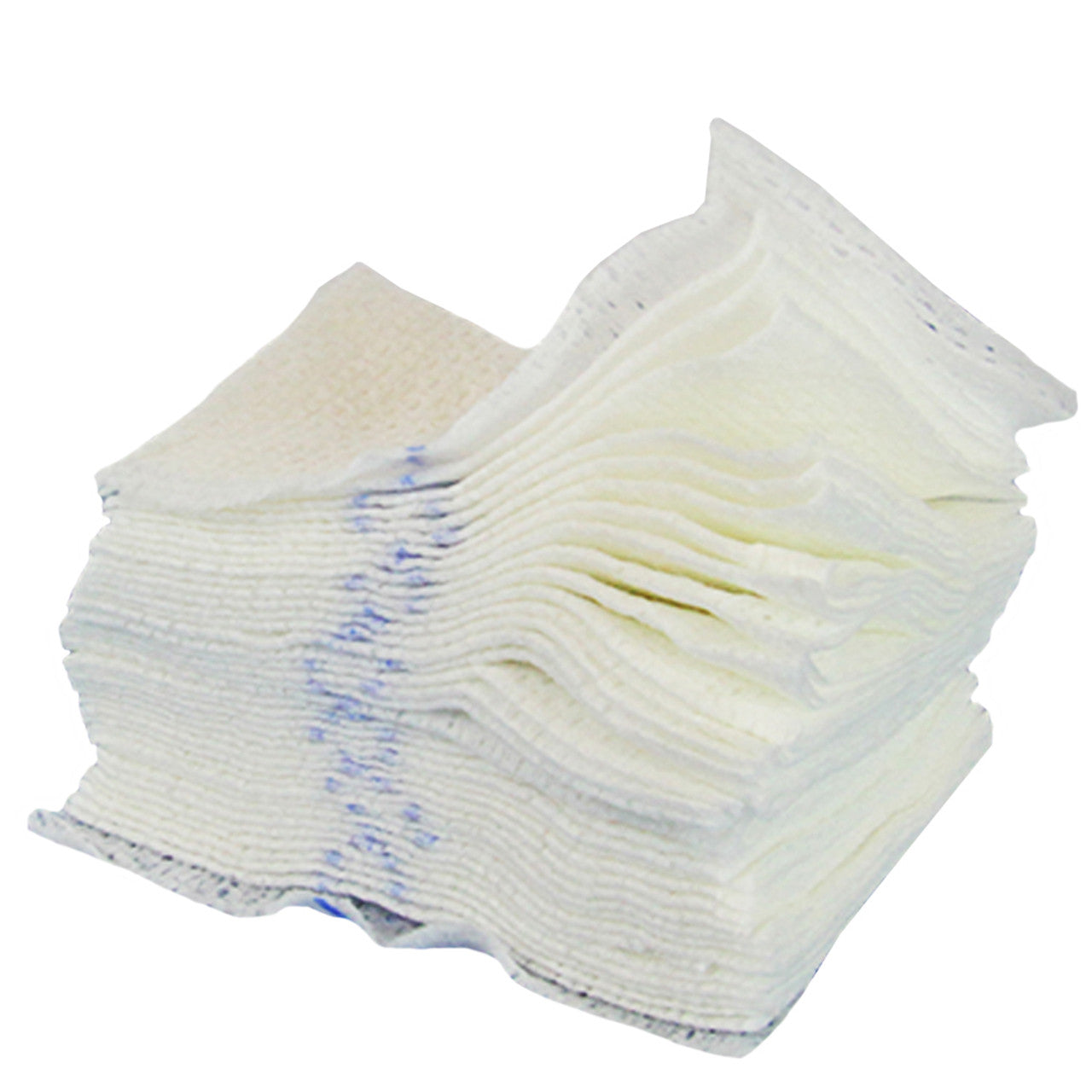
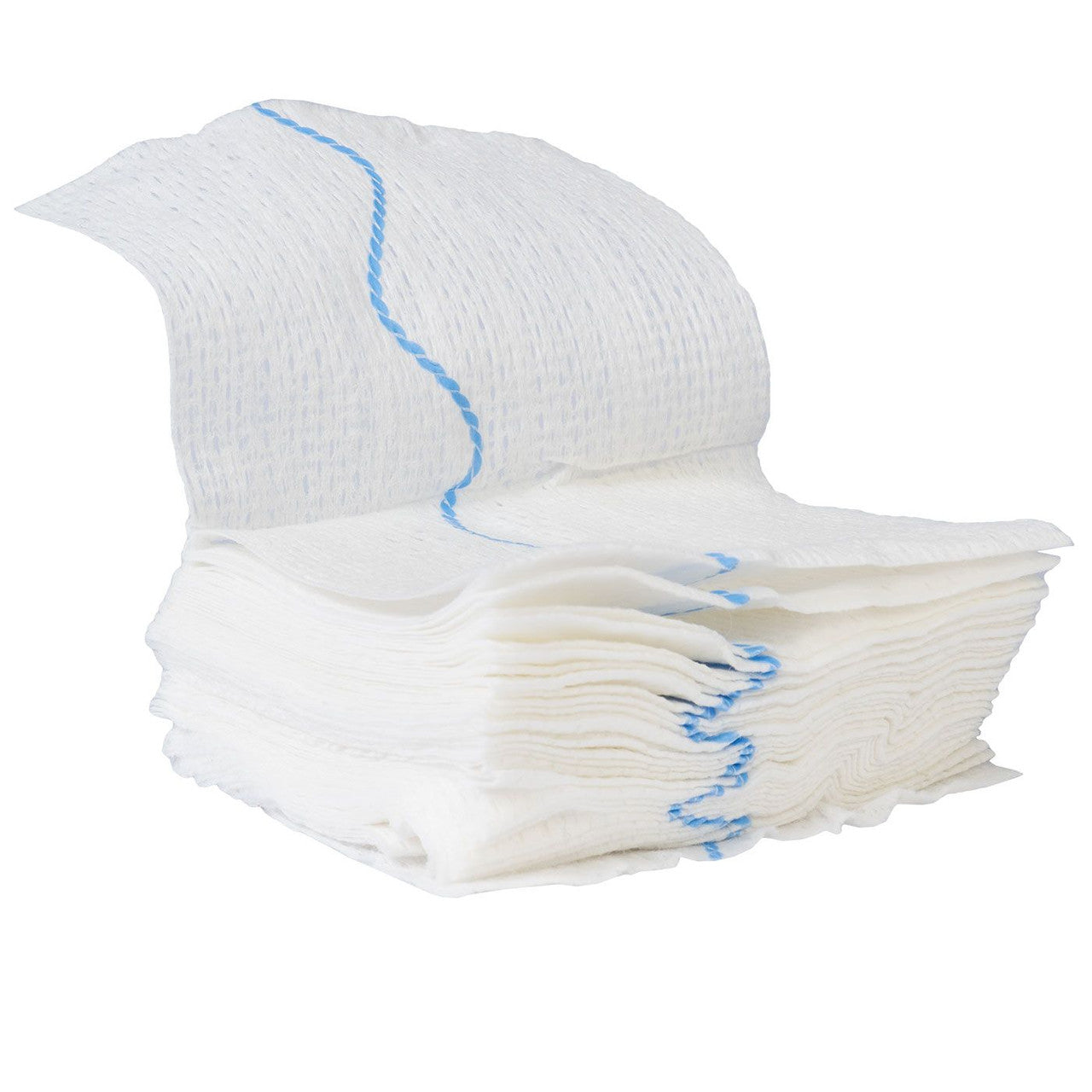
Z-folded or rolled gauze
-
A flat dressing or pad
-
A narrow ribbon
-
Loose granules
-
An applicator
-
Packing gauze built into a pressure bandage
Some products use ordinary gauze as a carrier for an active material. Other products are made almost entirely from the hemostatic material. Chito-SAM 100, for example, is a nonwoven dressing spun from chitosan rather than conventional gauze coated with chitosan.
Regardless of the material, a dressing must be applied where the bleeding is occurring and used with the pressure required by the product instructions and the responder’s training.
How do hemostatic dressings work?
Hemostatic dressings do not all work in the same way. Their mechanisms generally fall into three broad groups.
Some materials activate or accelerate part of the body’s clotting cascade. Others adhere to wet tissue and create a physical barrier or plug. Matrix-based products such as collagen, cellulose and related fibers provide a surface that supports platelet activity, blood-cell aggregation or local clot formation.
These mechanisms explain why two products intended to control bleeding may look similar but have different active materials, instructions and intended uses.
Hemostatic gauze versus regular gauze
Standard gauze controls bleeding primarily through wound packing and direct pressure. When packed correctly, it fills the wound space and transfers pressure to the source of bleeding. The American College of Surgeons teaches wound packing as one of the core bleeding-control actions, and standard packing gauze remains an important component of trauma kits.
Hemostatic gauze performs that same physical role while adding material intended to promote clot formation or create a local barrier.
The International Liaison Committee on Resuscitation suggests using a hemostatic dressing with direct pressure rather than direct pressure alone for severe, life-threatening external bleeding. However, it characterizes that recommendation as weak and the certainty of evidence as very low.
That supports a measured conclusion: hemostatic dressings can help achieve bleeding control more quickly in some settings, but they do not guarantee survival and they do not compensate for poor technique.
Types of Hemostatics
1. Kaolin-based hemostatic dressings
Kaolin is an inorganic mineral used in QuikClot hemostatic products. When kaolin comes into contact with blood, it activates Factor XII, which helps initiate part of the body’s natural coagulation process.
Rescue Essentials currently carries several kaolin-based QuikClot formats, including:
-
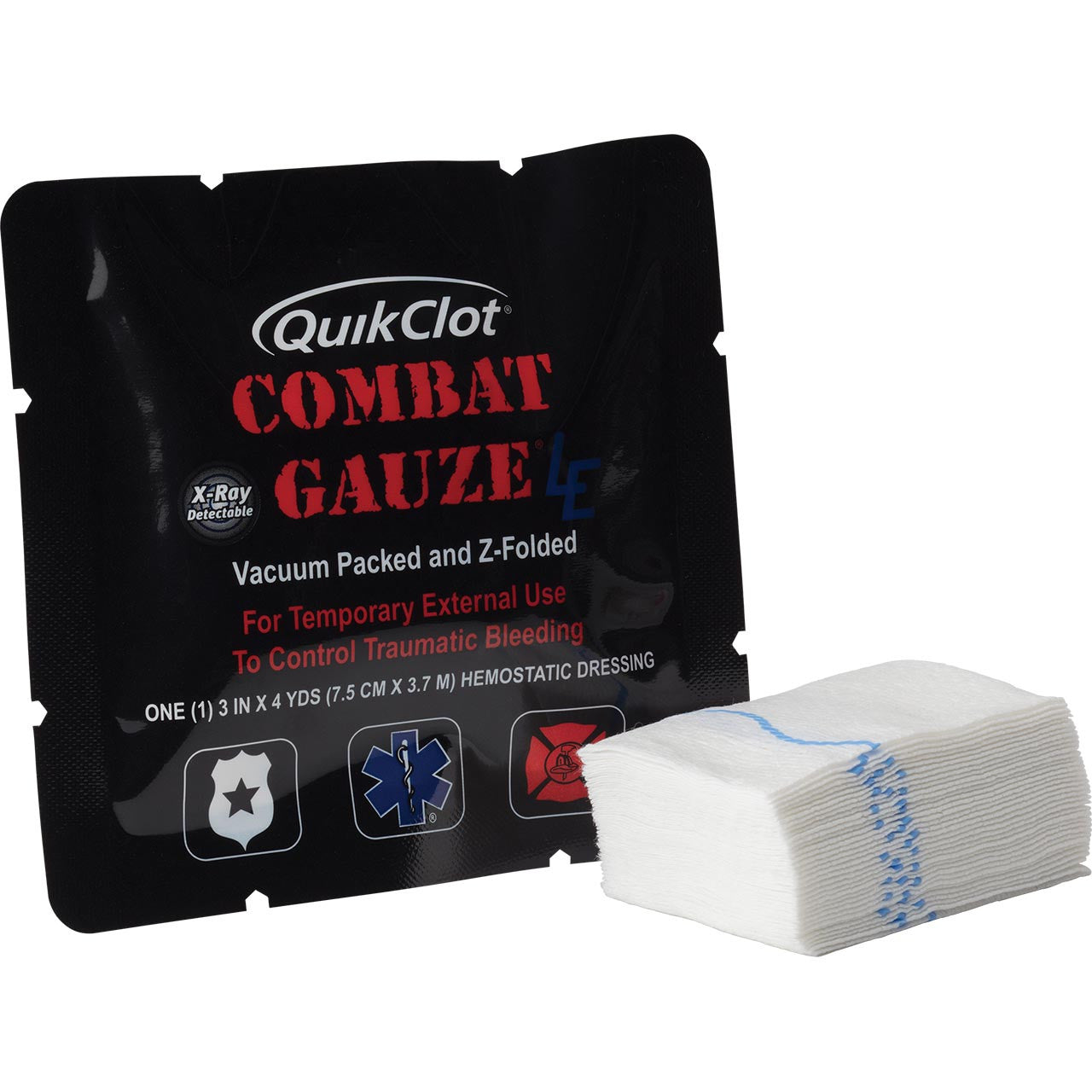
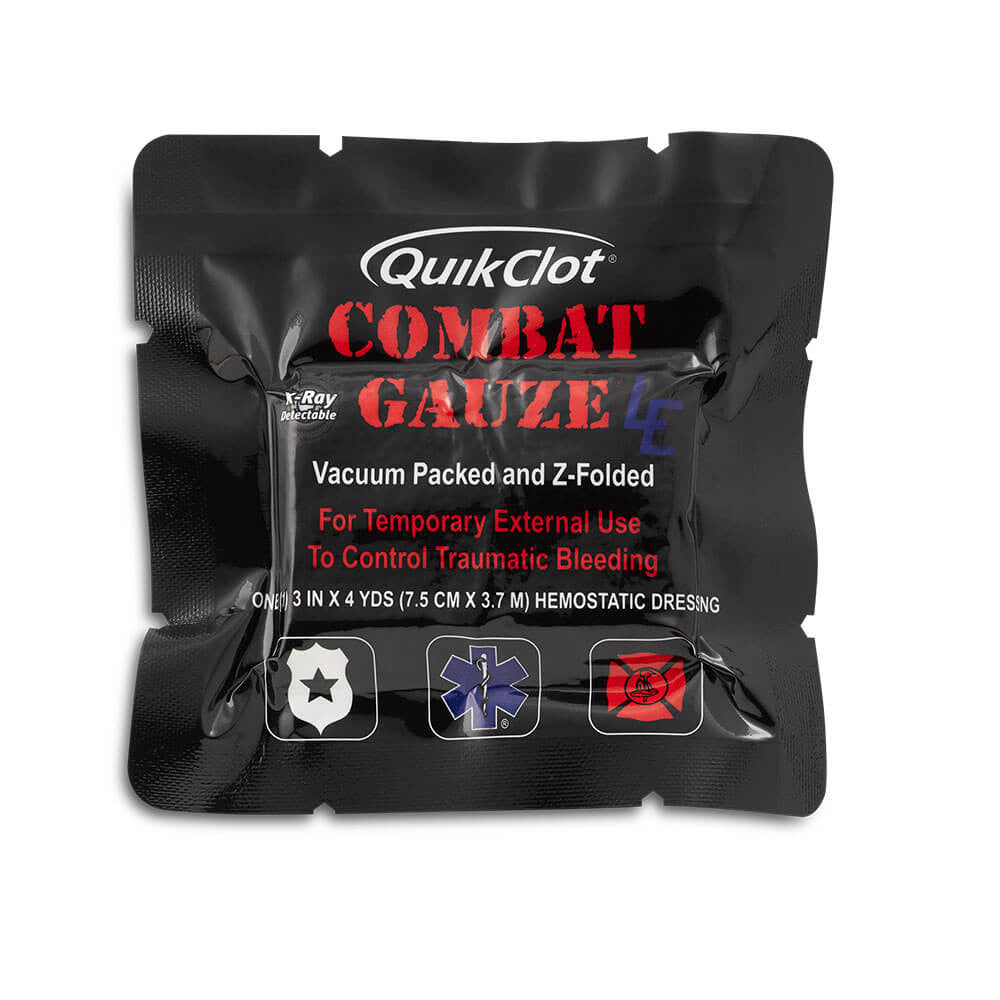
Combat Gauze Z-Folded
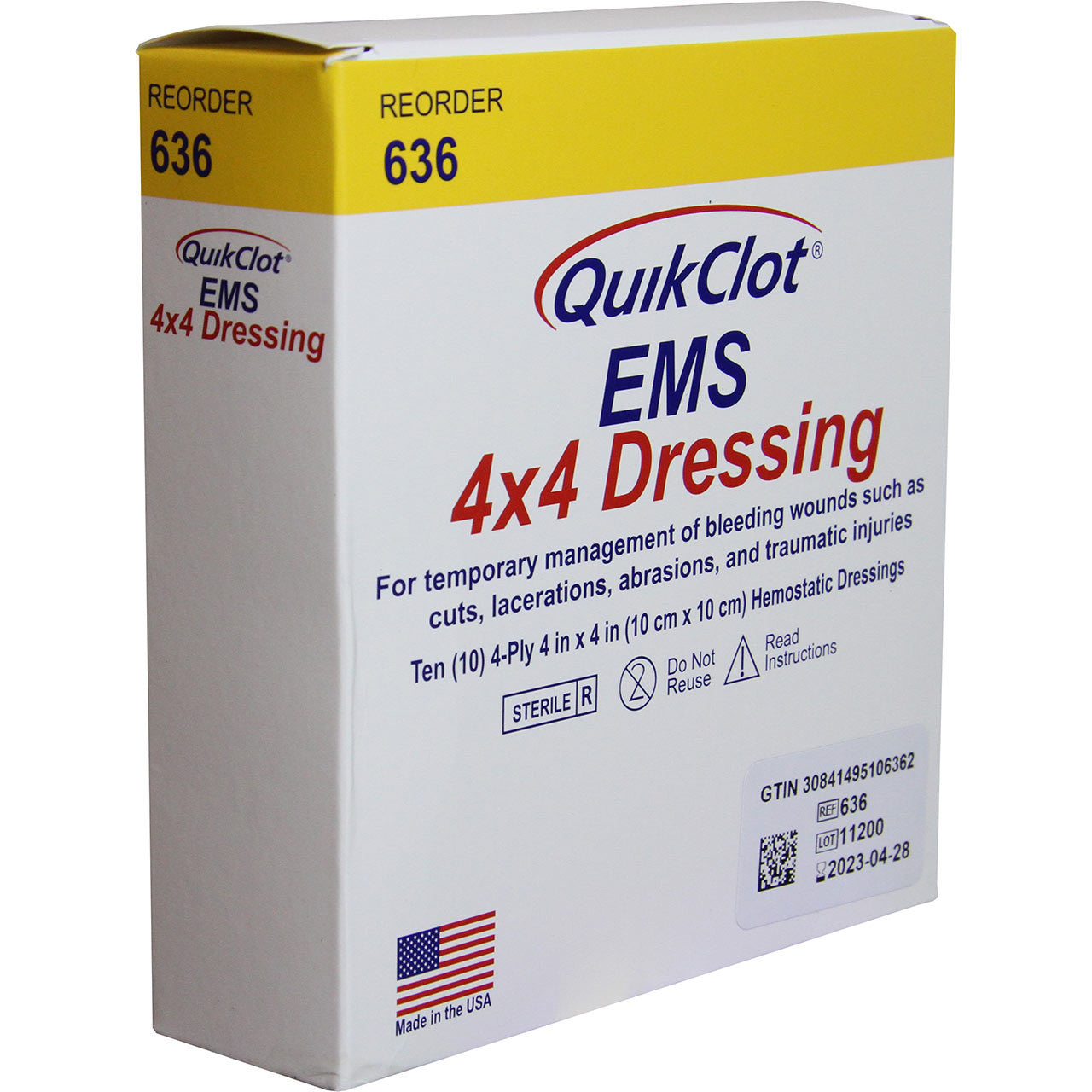
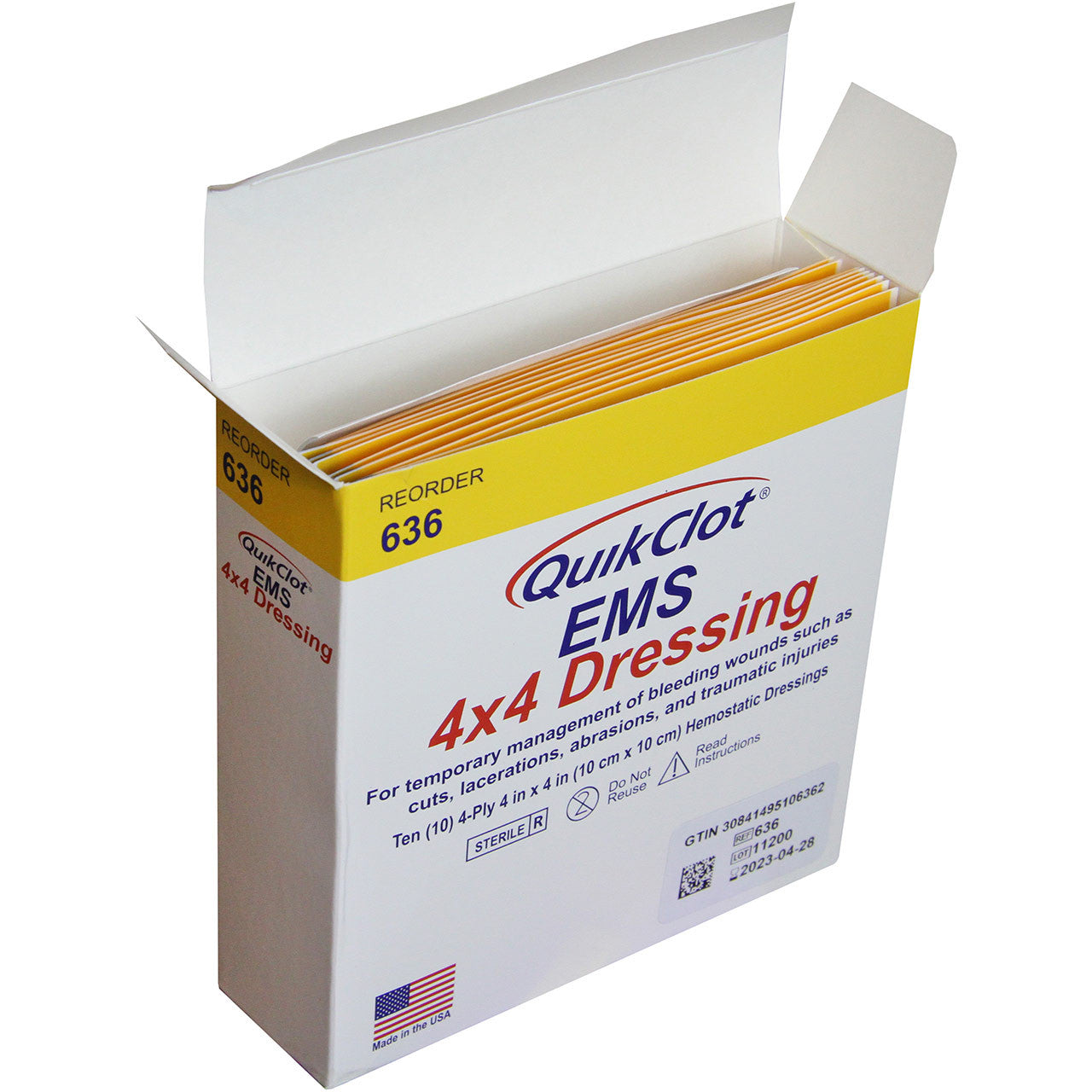
These products share kaolin technology, but they do not all contain the same amount or format of gauze. Combat Gauze is a full-length Z-folded product intended for serious wound packing. The EMS roll and 4 x 4 pad provide different configurations for other bleeding-control needs.
When might a kaolin-based dressing make sense?
Kaolin-based gauze may be a logical choice when:
-
Your agency, instructor or medical director specifies QuikClot
-
You want the exact hemostatic gauze identified as the TCCC dressing of choice
-
You have trained with standard gauze-packing techniques
-
You need a full-length Z-folded product with an X-ray-detectable strip
-
You want smaller kaolin pads or rolls for surface wounds and lacerations
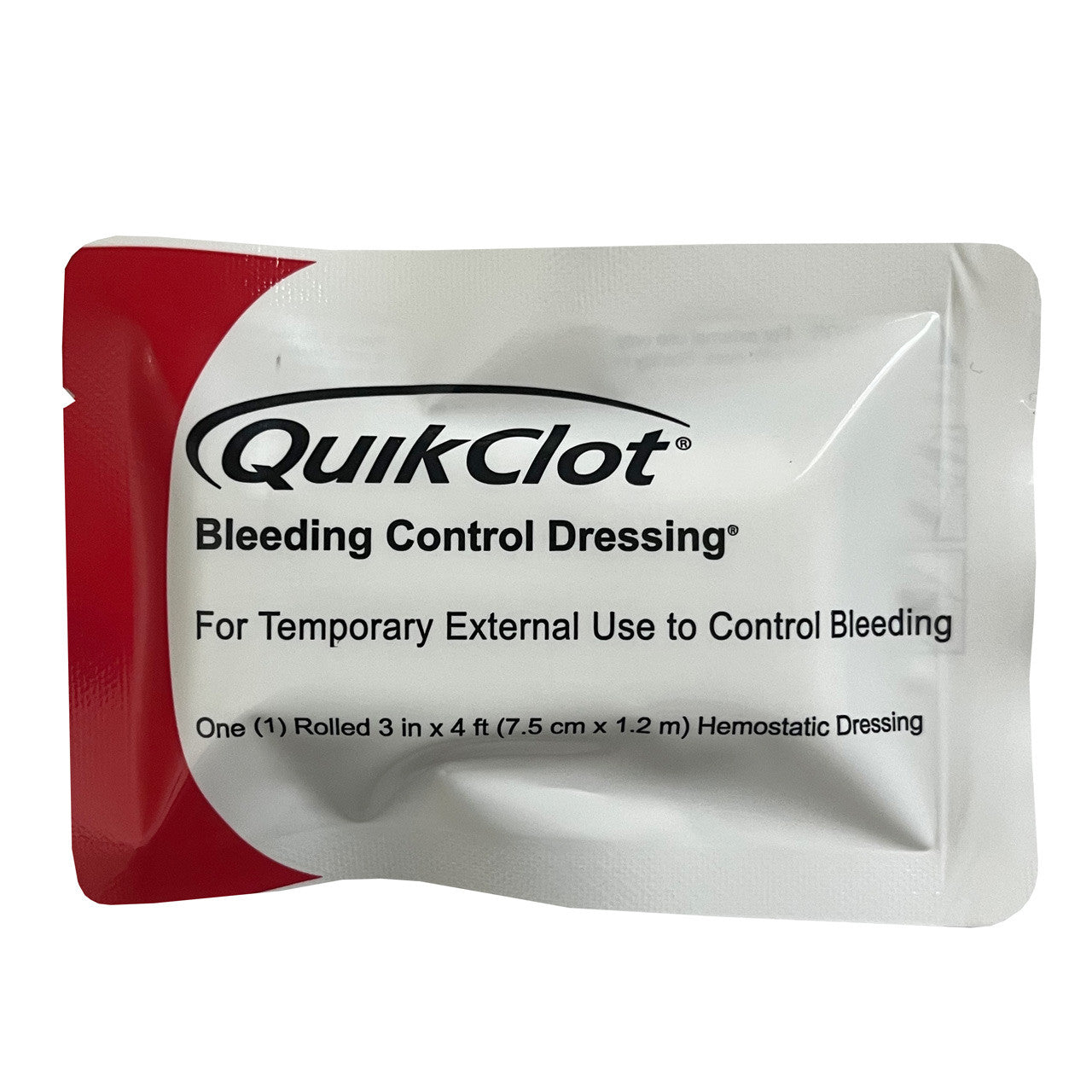
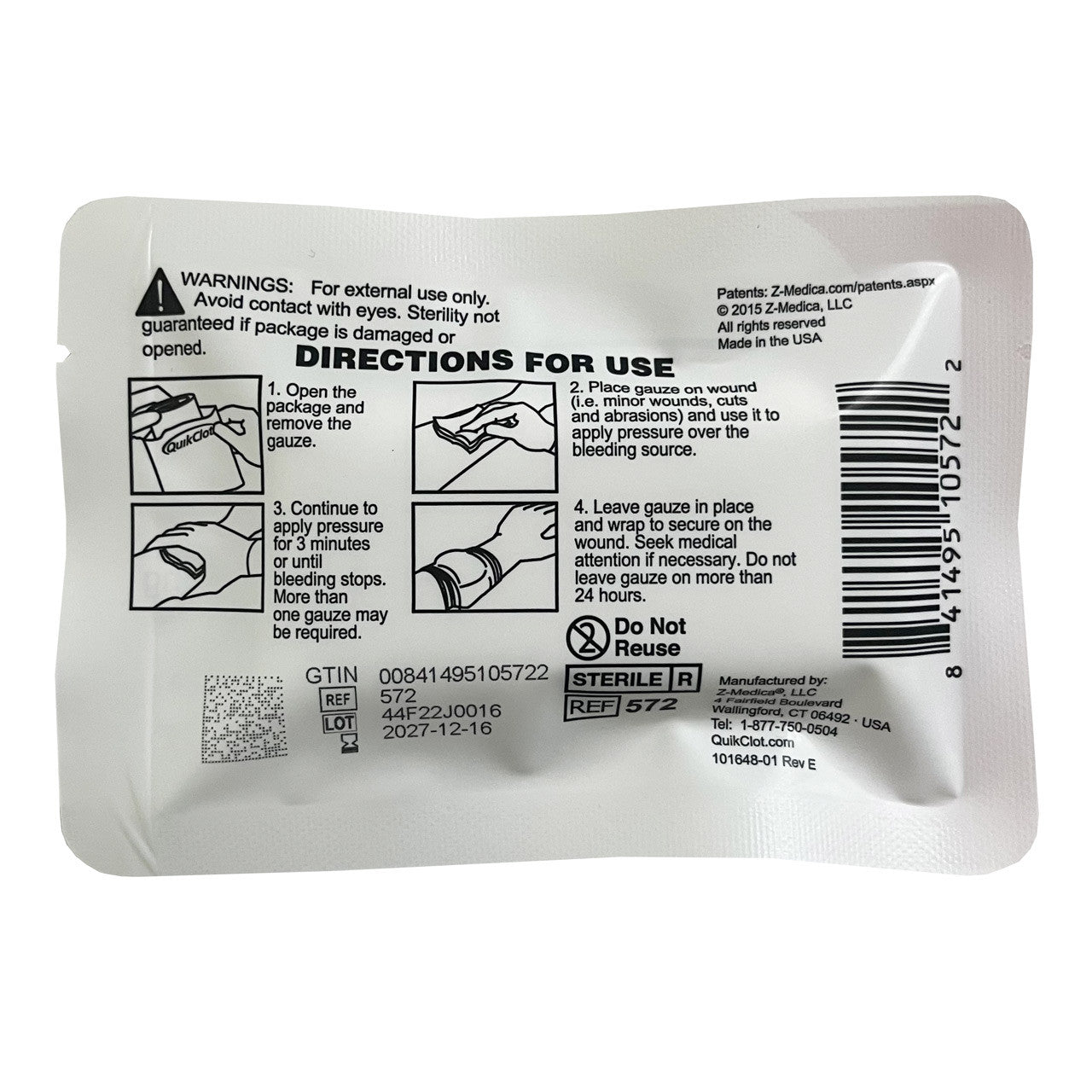
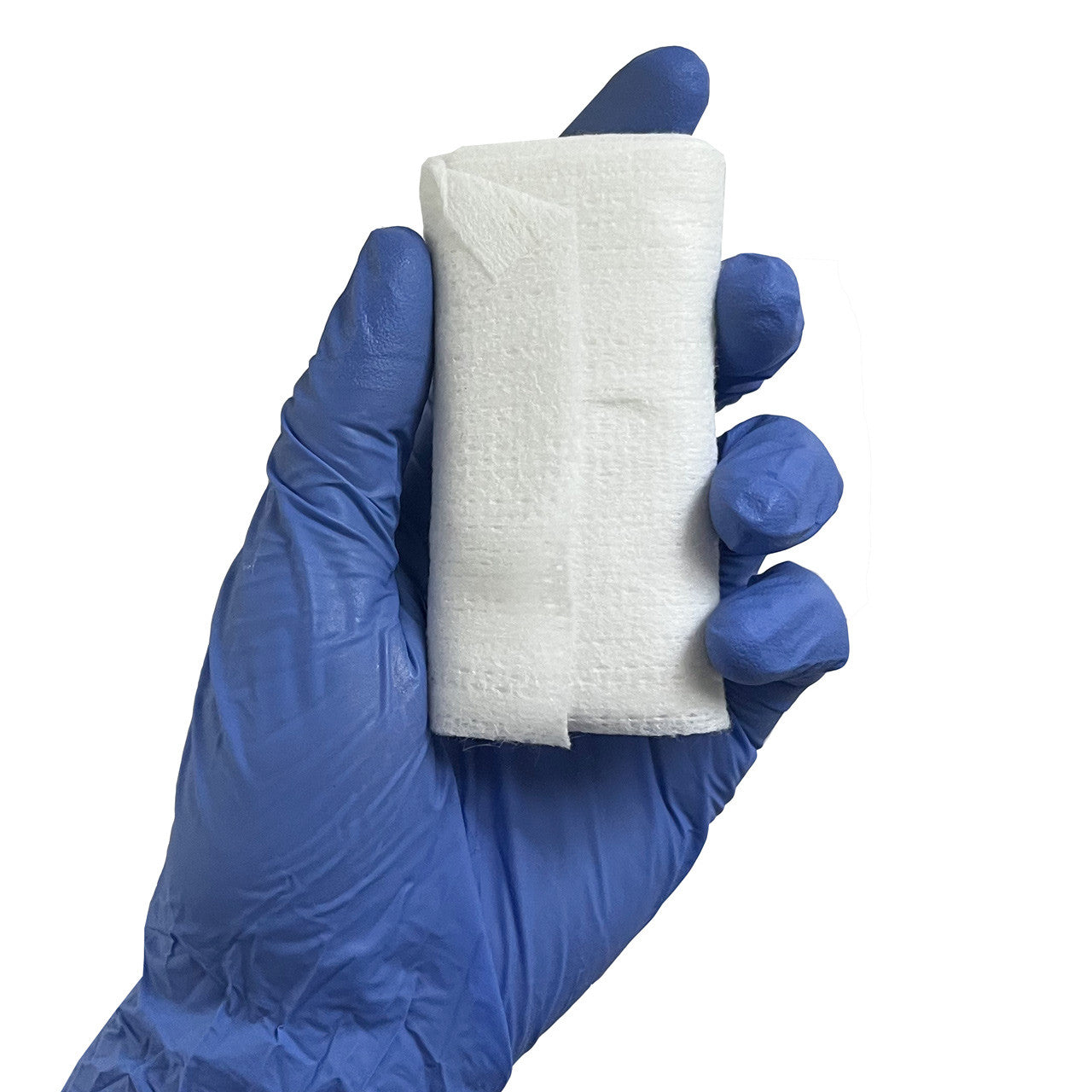
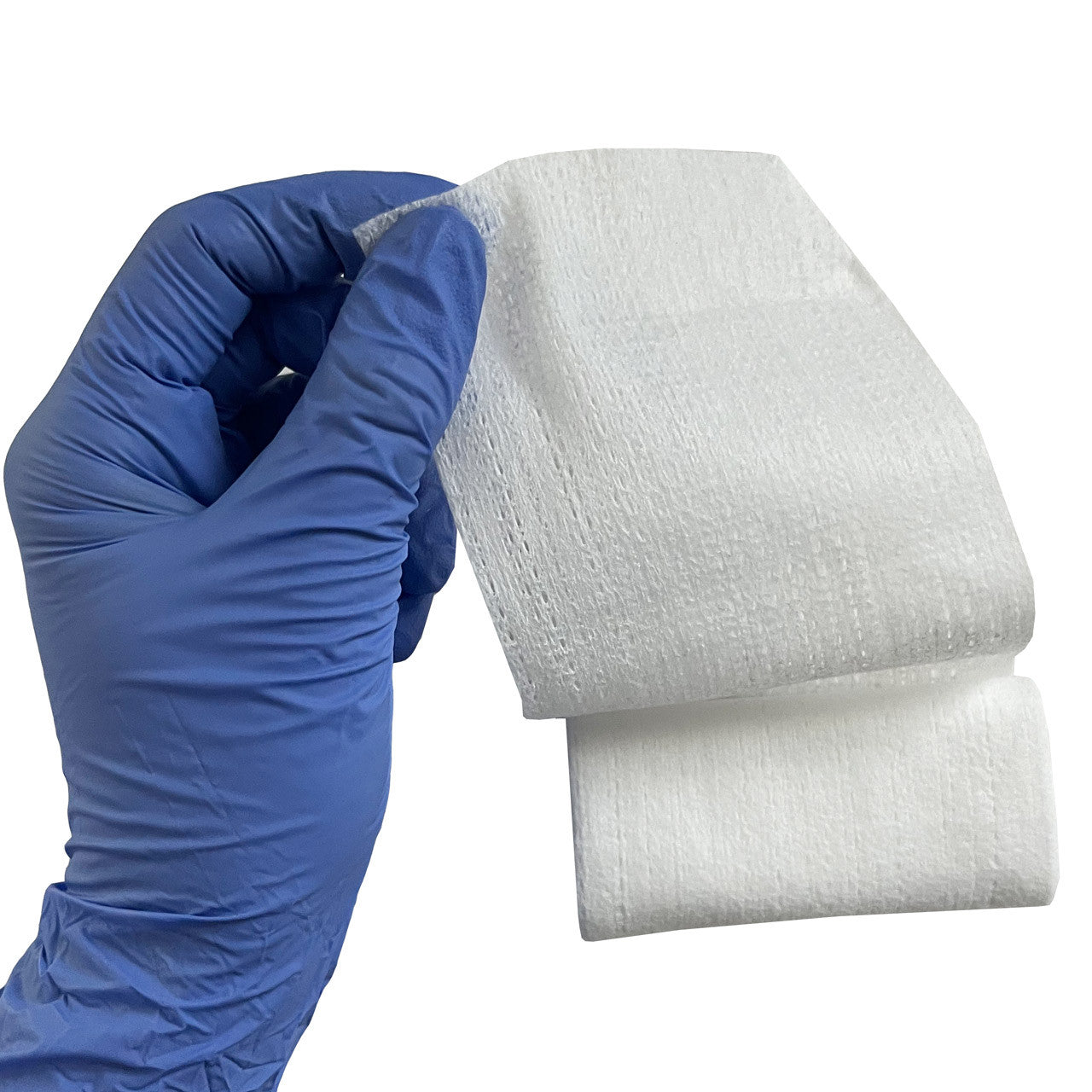
The key is to compare the exact QuikClot model, not merely the brand name. A 4 x 4 pad and a full-length Combat Gauze package are intended to fill different roles.
2. Chitosan-based hemostatic dressings

Chitosan is a purified polysaccharide commonly derived from crustacean shells. Chitosan products can use different constructions and mechanisms, so not every chitosan dressing should be treated as identical.
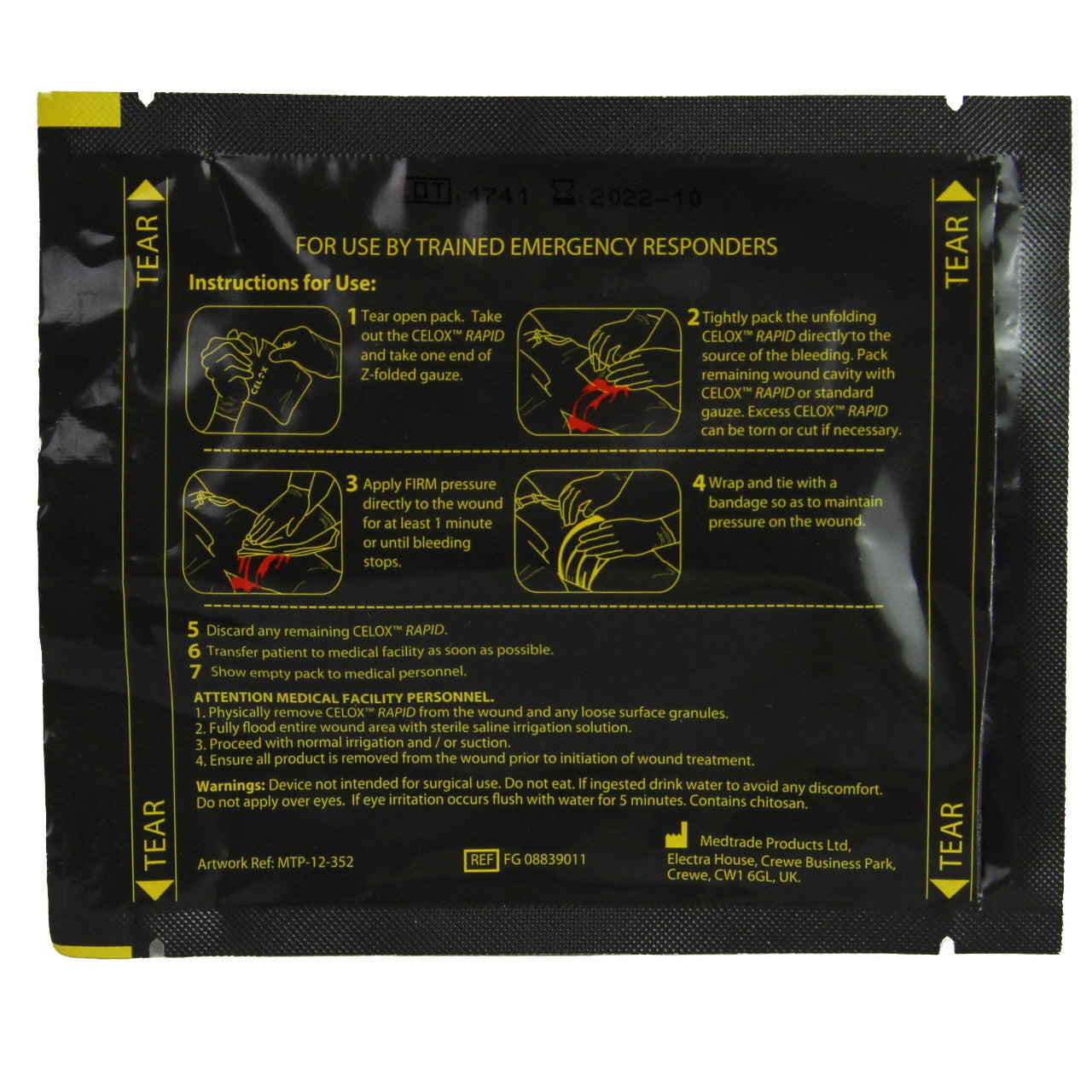
Celox Rapid uses activated chitosan granules that adhere to wet tissue and form an adhesive gel at the bleeding site. Chito-SAM 100 is made from nonwoven chitosan and is described by its manufacturer as working independently of the body’s normal clotting process.
Rescue Essentials currently carries chitosan products in several formats, including:
The current assortment illustrates how much format can vary within one material family. Chitosan is available as full-length gauze, a flat pad, a narrow ribbon, loose granules and an integrated bandage system.
When might a chitosan-based dressing make sense?
Chitosan may be a logical choice when:
-
Your training program or agency specifies Celox, ChitoGauze or another chitosan product
-
You want a product whose mechanism is less dependent on the normal clotting cascade
-
You need a specialized format such as a narrow ribbon, pad or applicator
-
You prefer an integrated dressing such as the OLAES Hemostatic Bandage
-
You have practiced with the exact product format you intend to carry
Do not assume that all chitosan products have the same application method or pressure time. Read and retain the instructions supplied with the exact product.
3. Collagen-based and cellulose-based dressings
Collagen and cellulose are different materials, even though they are sometimes grouped together as matrix-based hemostatic products.
Collagen provides a surface that supports platelet adhesion and activation. This interaction contributes to thrombin generation and fibrin formation during the clotting process.
Cellulose-based products use a different material and their mechanisms vary by design. NuStat, for example, uses a proprietary blend of regenerated cellulose and silica fibers. Its technical information describes mechanisms that include compression, platelet activation, amplification of the coagulation cascade and red blood cell aggregation.
Rescue Essentials currently carries the NuStat 4 x 4 Hemostatic Dressing as the clearest example of this broader fiber-based category. The 4 x 4 product is a flat dressing for the temporary control of bleeding from minor cuts, scrapes and abrasions.
That intended use matters. A small cellulose-based pad for a surface wound should not automatically be treated as a direct substitute for full-length trauma gauze intended to pack a deep wound.
Collagen-based hemostatic products are also found in surgical and wound-care environments. Their composition, indications and removal requirements can differ significantly from prehospital trauma gauze. Product-specific instructions are therefore especially important.

The active material is only half the decision
Buyers often focus first on kaolin versus chitosan. In practice, the product’s format may be equally important.
Z-folded or rolled gauze
Full-length gauze is intended for wound packing. It provides enough material to fill a deeper wound cavity while allowing the responder to maintain pressure at the source of bleeding.
Z-folded gauze feeds from the package in a controlled strip. Rolled gauze must be unrolled during application. Either format can work when the user has trained with it.
Flat dressings and pads
Flat pads are placed directly over a bleeding surface. They may be useful for lacerations, abrasions and other wounds that do not require an entire length of packing gauze.
Examples include QuikClot EMS 4 x 4, Chito-SAM 100 4 x 4, Celox 8 x 8 and NuStat 4 x 4. Their intended wound types are not identical, so the package labeling should guide selection.
Ribbons, granules and applicators
Narrow ribbons, loose granules and applicators are designed for more specialized wound shapes or delivery requirements.
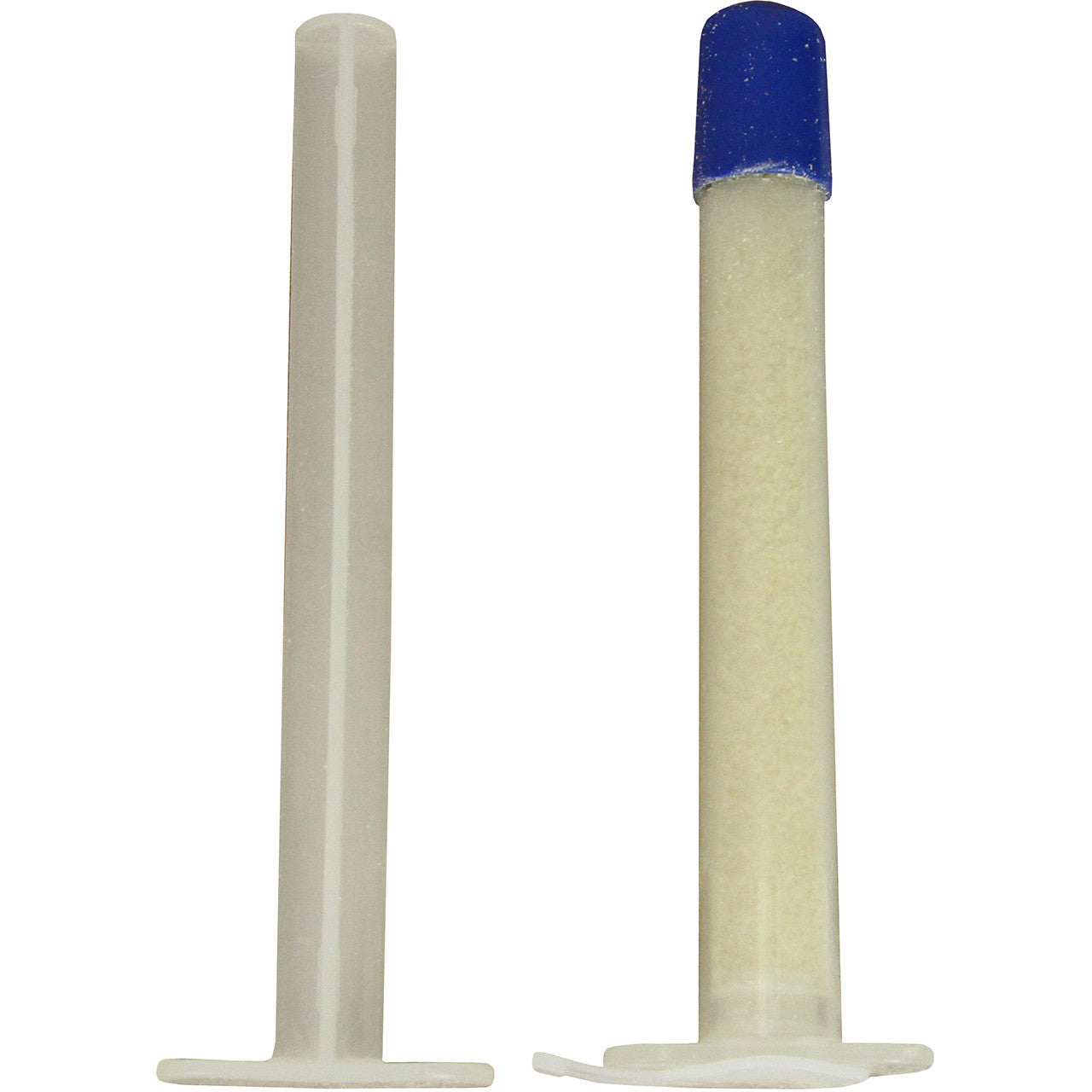
Rescue Essentials carries Celox Rapid Ribbon, Celox granules and the Celox-A applicator. These formats should be selected based on product-specific training rather than simply because their packages are smaller.
Integrated hemostatic bandages
An integrated product combines hemostatic packing material with a pressure or trauma bandage. The OLAES Hemostatic Bandage, for example, includes ChitoGauze PRO within the OLAES Modular Bandage system.
This format can consolidate components, but the user should practice locating and deploying the packing gauze before placing the product into service.

What does TCCC recommend?
The Tactical Combat Casualty Care Guidelines are written for military trauma care. They are an important reference for hemostatic products, but they are not a universal ranking of every dressing for every civilian use.
As of May 2026, TCCC identifies Combat Gauze as the CoTCCC hemostatic dressing of choice for compressible external hemorrhage that is not amenable to a limb tourniquet or as an adjunct during tourniquet removal. The current alternatives include Celox Gauze, ChitoGauze, XStat and iTClamp. The guidelines call for hemostatic dressings to be applied with at least three minutes of direct pressure.
Several details are important for buyers:
-
The guideline identifies exact products. It does not state that every product using kaolin or chitosan is automatically CoTCCC recommended.
-
A brand may offer recommended and non-recommended formats. Celox Gauze and Celox granules, for example, should not be assumed to have the same recommendation merely because they use the same brand and active material.
-
TCCC is not the only applicable guidance. Civilian first aid training, agency protocols and medical direction may use different procedures.
-
Pressure times are product-specific. TCCC specifies at least three minutes for its hemostatic dressings, but individual product instructions may differ. Follow the product’s instructions, your training and applicable protocols.
The 2017 TCCC document previously supplied by Rescue Essentials contains the same core recommendation for Combat Gauze, Celox Gauze and ChitoGauze. The 2026 version should nevertheless be used as the current reference.
How to choose a hemostatic dressing for your kit
1. Start with the bleeding problem
For a trauma kit intended to address severe, packable external bleeding, a full-length Z-folded or rolled gauze is generally the most useful starting format.
For surface lacerations, abrasions and smaller wounds, a pad may be more practical.
Ribbons, granules and applicators are more specialized. Carry them when they match your training and anticipated use.
2. Choose the format before debating the ingredient
A full-length kaolin gauze and a full-length chitosan gauze have more in common operationally than either has with a small 4 x 4 pad.
Ask:
-
Is there enough gauze to pack the intended wound?
-
Can the package be opened with gloved or wet hands?
-
Does it have an X-ray-detectable marker if your protocol requires one?
-
Will the package fit and remain protected in the intended kit?
-
Can you identify it by touch or in low light?
3. Follow your training or agency standard
Familiarity and correct application are critical. One study of hemostatic dressings found that prior medical training improved application efficacy. The American College of Surgeons also emphasizes hands-on practice for direct pressure, wound packing and tourniquet use.
For an individual kit, consider carrying the same product used in your bleeding-control course. For an agency, standardizing one product can simplify training, inventory and quality assurance.
4. Check the exact instructions and labeling
Before purchase, verify:
-
Intended use
-
Dressing dimensions
-
Required pressure time
-
Shelf life and expiration date
-
Storage requirements
-
X-ray detectability
-
Purchase or professional-use restrictions
-
Warnings and contraindications
Do not rely solely on a product-family name or a comparison article.
5. Practice with a trainer
A live hemostatic dressing is normally kept sealed until needed. Trainer versions let users practice opening the package, feeding the gauze and packing a simulated wound without consuming the carried product.
Rescue Essentials carries QuikClot trainer packages, TrueClot simulated hemostatic gauze and wound-packing trainers intended for repeated practice.
A practical starting point for trained civilians
For a trained civilian building a compact range, vehicle or outdoor trauma kit, a full-length Z-folded hemostatic gauze is often the most versatile first hemostatic format.
The choice between kaolin and chitosan can then be based on:
-
The product used during training
-
Applicable protocols
-
Package dimensions
-
Instructions for use
-
Availability and cost
-
Preference for a particular delivery format
Standard compressed or wound-packing gauze should still be carried. It is inexpensive, useful for packing and bandaging and provides additional material if more than one wound must be managed.
A small hemostatic pad can also be useful, but it should not be treated as a replacement for full-length packing gauze when the kit is intended for serious trauma.
The bottom line
Hemostatic dressings are not one product category with one mechanism or one ideal use. They include kaolin-based gauze, chitosan-based products and matrix-based dressings using materials such as collagen, cellulose or silica.
For most buyers, the selection process should follow this order:
-
Identify the bleeding problem the kit is intended to address.
-
Choose an appropriate format.
-
Follow training or agency protocols.
-
Compare the exact product instructions.
-
Practice before placing the product into service.
Rescue Essentials carries full-length hemostatic gauze, pads, ribbons, granules, applicators, integrated bandages and training products from QuikClot, Celox, Chito-SAM, HemCon, NuStat and other established manufacturers.





Share:
The Complete Guide to Vehicle First Aid Kits: Essentials, Recommendations & Top Picks